
Combining Sawing, Drilling and Milling for Aluminum Profiles
Assess which stock moves and datum resets a combined cutting and machining workflow can remove.
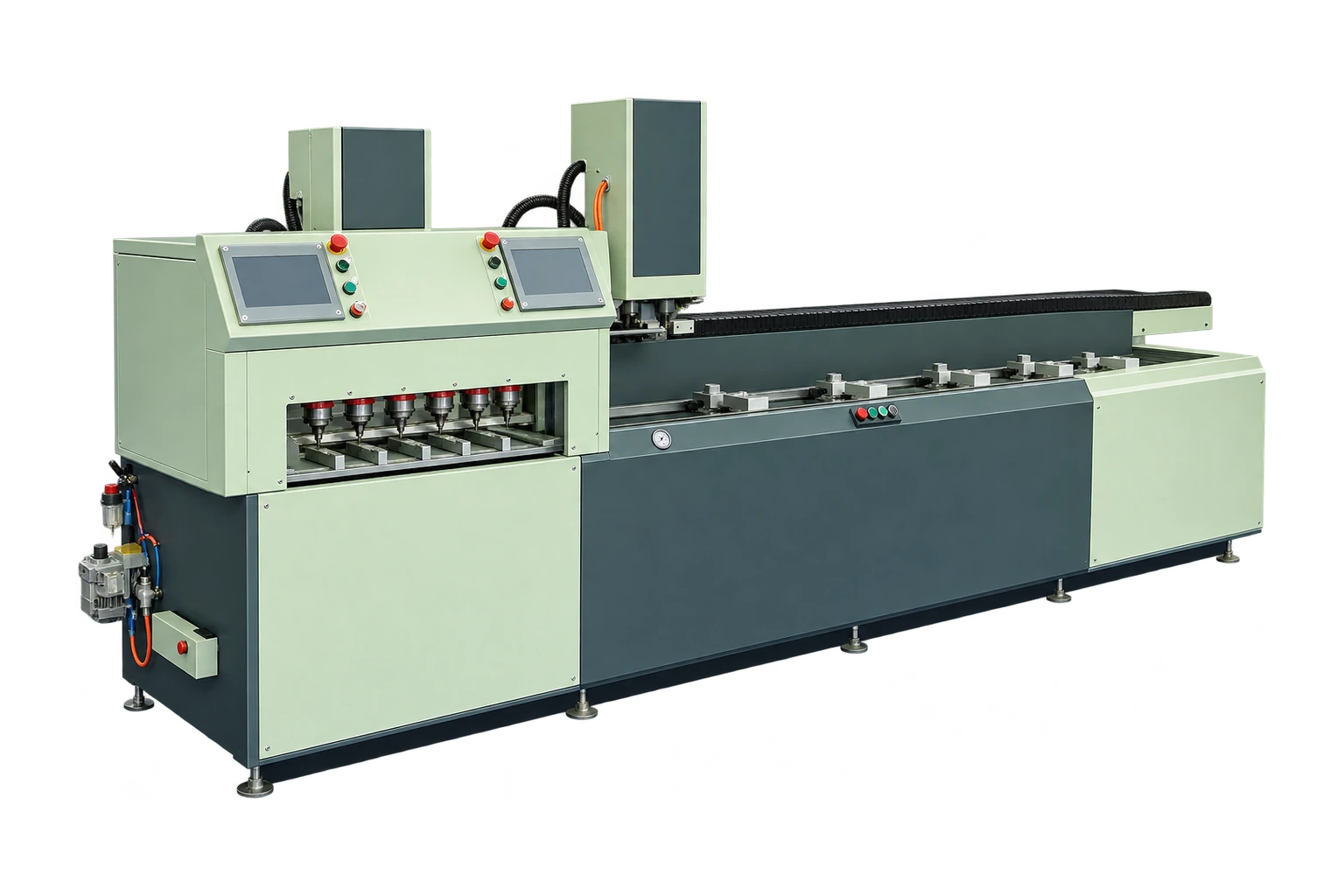
Trace the current route
List sawing, marking, loading, face drilling, pocket milling and inspection in order. Record where operators change the reference or flip the part. Mark the operations that must remain separate, such as a special end profile that the proposed machine cannot reach.
Ask for a sequence, not a machine name
Have the supplier show whether stock is cut before or after machining and how the program carries the finished reference between operations. Ask what supports the retained part and which faces remain accessible under the approved guarding. Verify the agreed order on a handed part so mirroring errors are visible.
Measure the full batch
Run the same cut list on both workflows. Count accepted parts and record setup, handling, inspection and scrap. Check location of drilled features from the finished saw cut. A combined station is most valuable when it removes a repeatable source of handling or datum variation on the jobs you actually run.
What to record before production release
Mark every transfer between operators and stations on a route card. A combined process can change where rejected parts are discovered. Include the amount of value added before rejection when comparing the two routes.
Related equipment and reading
Send your drawings or samples for review.
Technical reference
Fom Industrie FMC technical sheet. An industry example of documenting working areas, stops, vices and tool configuration independently. It does not specify Jinren capability.