
Digital Glass Printing: Translating Print Speed into Good Panels per Shift
At the assumed print speed, handling time and first-pass yield, a 420-minute production window delivers about 40 good glass panels.
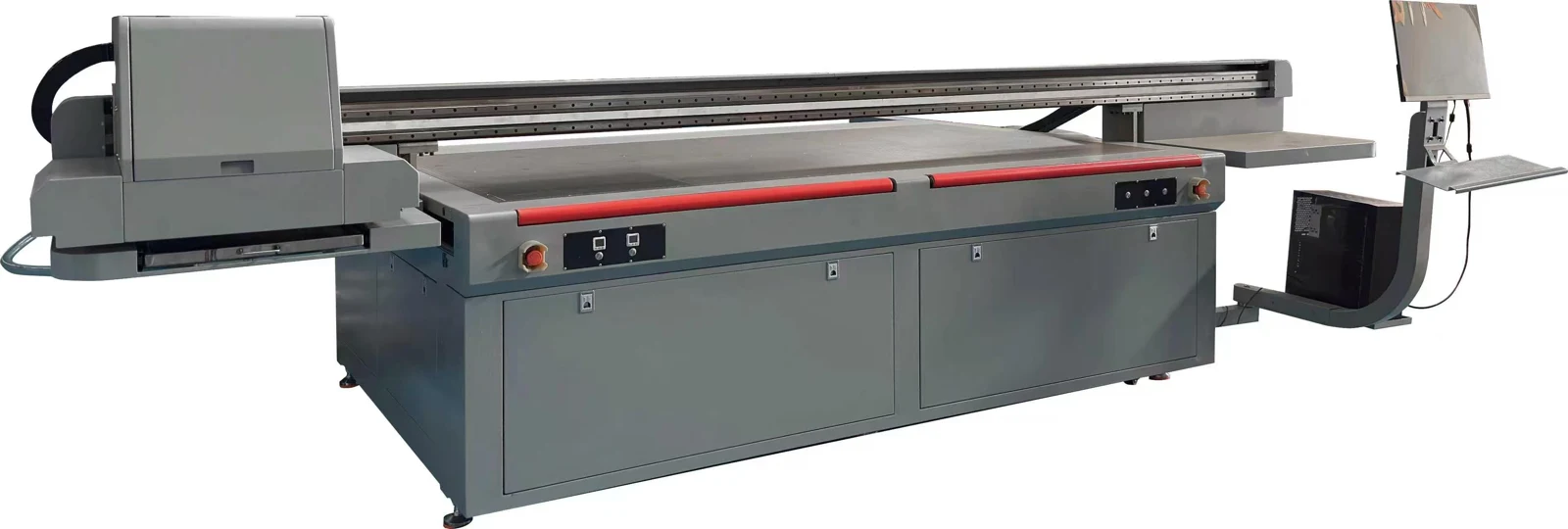
This application example uses public references and explicitly stated planning inputs. Figures derived from assumptions are estimates for evaluation, not measured customer results.
Production question
How should a shop estimate sellable output when the supplier quotes print area per hour?
Worked calculation
Model a 1.8 m² panel at an assumed effective 18 m²/h for the chosen ink stack, or 6 minutes of printing. With 4 minutes of serial cleaning, alignment, unloading and inspection, the cell makes 6 panels/hour. In 420 productive minutes at 95% first-pass yield, the expected output is 39.9 good panels.
How to validate it on the shop floor
Time the approved production artwork including white, primer or varnish where required. Record interruptions, reprints and operator handling separately. Compare output after adhesion and appearance inspection.
What to do with the result
If the same artwork slows to an effective 12 m²/h, the 1.8 m² panel needs 9 minutes of printing. At 13 minutes total per panel, the modeled good output drops from about 40 to about 31 panels per 420 productive minutes. Use that sensitivity when scheduling jobs with different ink stacks. If panels can be cleaned or inspected in parallel, model the stations separately instead of charging all handling to the print cycle.
Practical follow-up
Can the catalogue’s fastest mode replace the assumed 18 m²/h? Use measured speed for the intended passes, ink layers and coverage. A rated maximum establishes a different planning boundary.