
Concealed Hinge Slot Machining for Handed Aluminum Doors
Qualify mirrored door parts by checking pocket orientation, mounting datums and installed hinge fit.
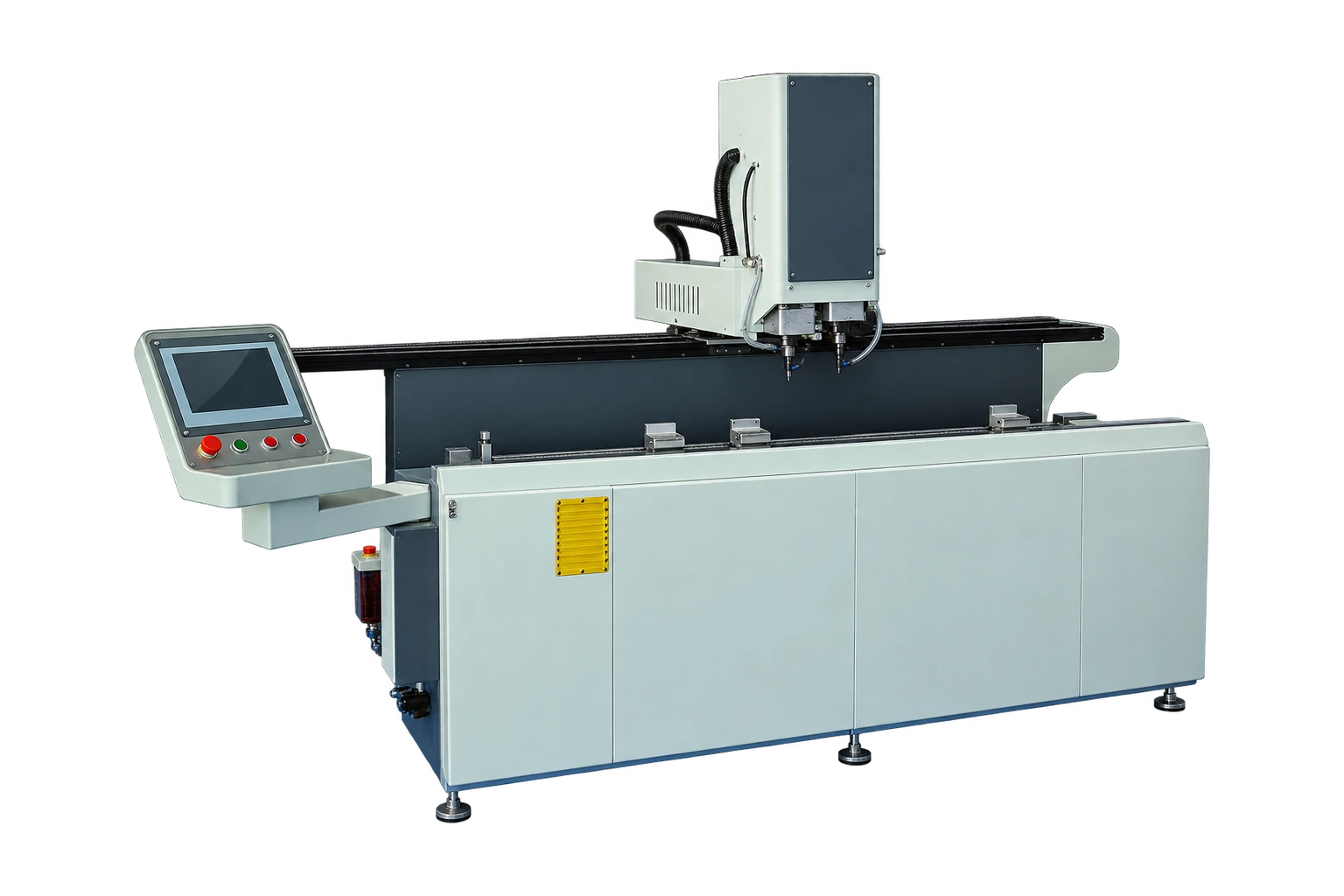
Mark the door hand on the drawing and the stock
Use separate left and right setup sheets when concealed hinge machining for aluminum doors requires mirrored geometry. Identify the hinge side, door swing, visible face and end stop. Check which features mirror and which still reference a common frame datum. Keep the hardware drawing revision with the program.
Test tool reach in the actual fixture
Overlay the pocket and fastener locations on the extrusion cross-section. Verify the holder clears the jaws while reaching the full pocket depth. Ask the supplier to demonstrate both handed variants and record which faces are reachable without reclamping. Check that the fixture does not mark a finished face.
Inspect the hinge installed
Seat the hinge with the approved fasteners. Check pocket alignment, fastener seating and the clearances required by the hardware instructions. Trial-fit the door to the mating frame and observe its movement over the required range. If the two hands differ systematically, check the origin and mirror transformation before editing the cutting path.
What to record before production release
Ask the operator to explain how the control distinguishes handed programs without relying on the filename alone. Put a visible witness feature on the trial drawing and inspect it on both hands before running an order.
Related equipment and reading
- JR-2200 Three-Sided Hinge Milling Machine
- CNC Milling Lock Pockets and Concealed Hinges in Aluminum Doors
Send your drawings or samples for review.
Technical reference
Fom Industrie FMC technical sheet. An industry example of documenting working areas, stops, vices and tool configuration independently. It does not specify Jinren capability.