
Concealed Hinge Machining for Aluminum Doors: Routing Offset Check
A 30 mm guide ring and 24 mm cutter give a 3 mm radial offset. Check the exact hinge variant and routing step before programming.
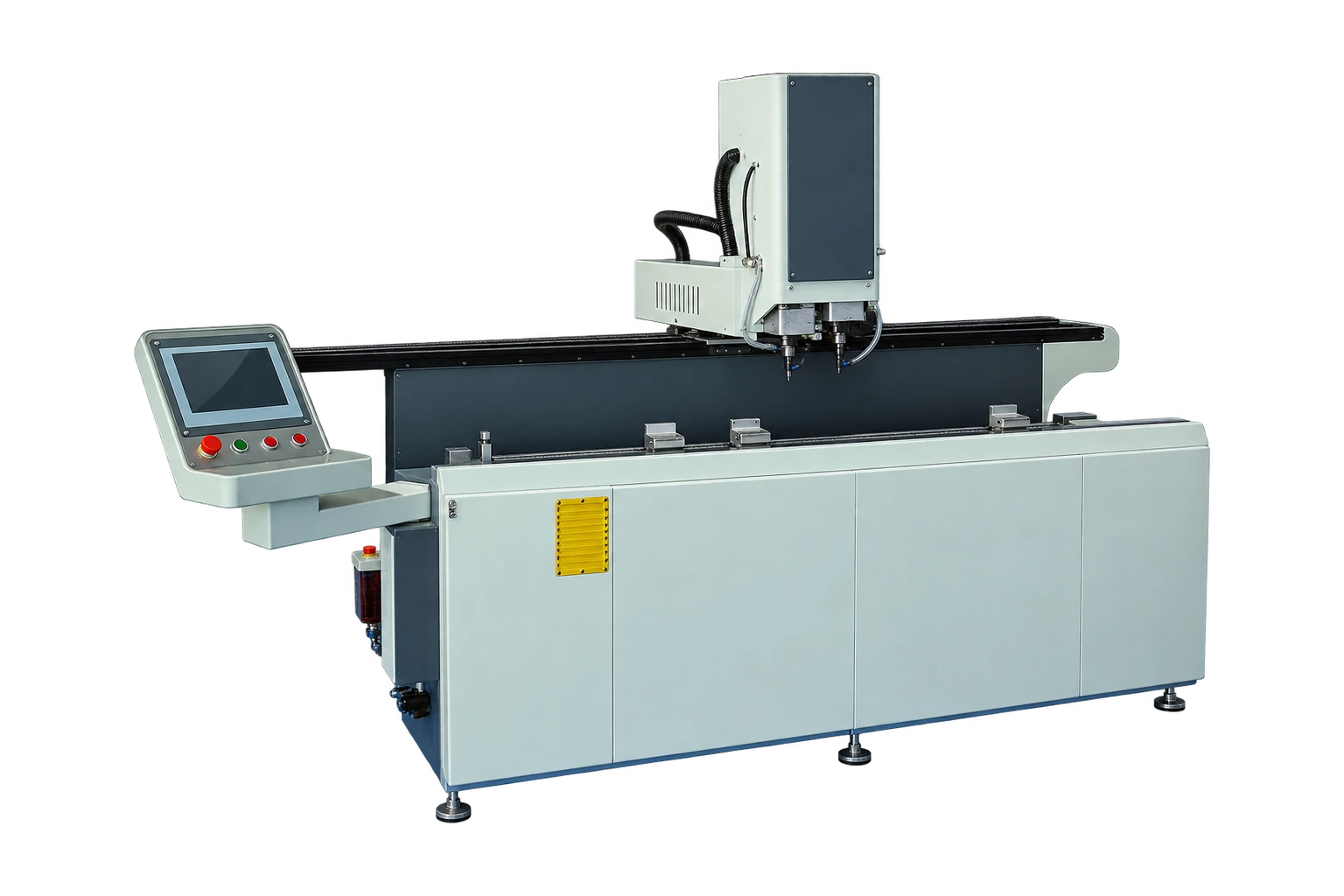
This application example uses public references and explicitly stated planning inputs. Figures derived from assumptions are estimates for evaluation, not measured customer results.
Production question
What lateral offset is implied by a hardware supplier’s guide-ring and cutter combination?
Worked calculation
SIMONSWERK lists a 24 mm cutter and 30 mm guide ring for specific TE 541 3D FVZ template operations. For a concentric ring and cutter, radial offset is (30 − 24) ÷ 2 = 3 mm. Other listed steps use different templates, even where the tool diameters match.
How to validate it on the shop floor
Start from the supplier’s frame and leaf drawings for the exact hinge variant. Compare pocket depth, screw centers and leaf clearance on a coupon before cutting a production stile.
What to do with the result
Keep the frame and leaf operations in separate, labeled programs. A routing template with a matching ring size can still describe a different cut stage. Inspect the hinge body shoulder against the pocket step and check that the fasteners seat without forcing the hinge to pull the leaf into alignment. Save the exact supplier drawing revision alongside the program and revalidate after a hardware substitution.
Practical follow-up
Should a CNC programmer offset the hardware CAD model by 3 mm? Use the final required pocket geometry with the CAM tool compensation. The guide-ring calculation applies to the physical template setup.
How to machine concealed hinge slots in aluminum doors depends on the exact hinge drawing and the routing method. Check the final pocket geometry on a coupon before machining a full stile.