
Curtain Wall CNC Machining: Temperature Shift Across a 4 m Profile
A 4 m 6063-T6 profile is predicted to grow 0.752 mm across an 8 K temperature change, enough to matter when gauging far-end features.
This application example uses public references and explicitly stated planning inputs. Figures derived from assumptions are estimates for evaluation, not measured customer results.
Production question
Can a profile transferred from warm storage move enough to affect a far-end hole location?
Worked calculation
Hydro gives a typical linear expansion coefficient of 23.5 µm/m·K for 6063-T6 around room temperature. For a uniform 8 K difference over 4 m, the predicted length shift is 23.5 × 4 × 8 = 752 µm, or 0.752 mm. At 1 m from the same datum, the estimate is 0.188 mm.
How to validate it on the shop floor
Record profile and fixture temperature at both ends and check a stabilized part against the drawing’s reference conditions. Repeat with a near-end and far-end feature to separate a datum offset from a length-dependent change.
What to do with the result
Mark the fixed datum on the setup sheet and record where the far-end dimension is measured. At 8 K above the reference temperature, the predicted difference between the 1 m and 4 m stations is 0.564 mm. If both stations show the same shift, investigate the fixture or probe origin first. If the measured shift grows with distance, repeat the check after thermal stabilization and compare the slope.
Practical follow-up
Can a 0.752 mm offset simply be programmed out? Only after confirming the temperature field, datum and measurement method. A warm end and a cool end need a different treatment from a uniform change.
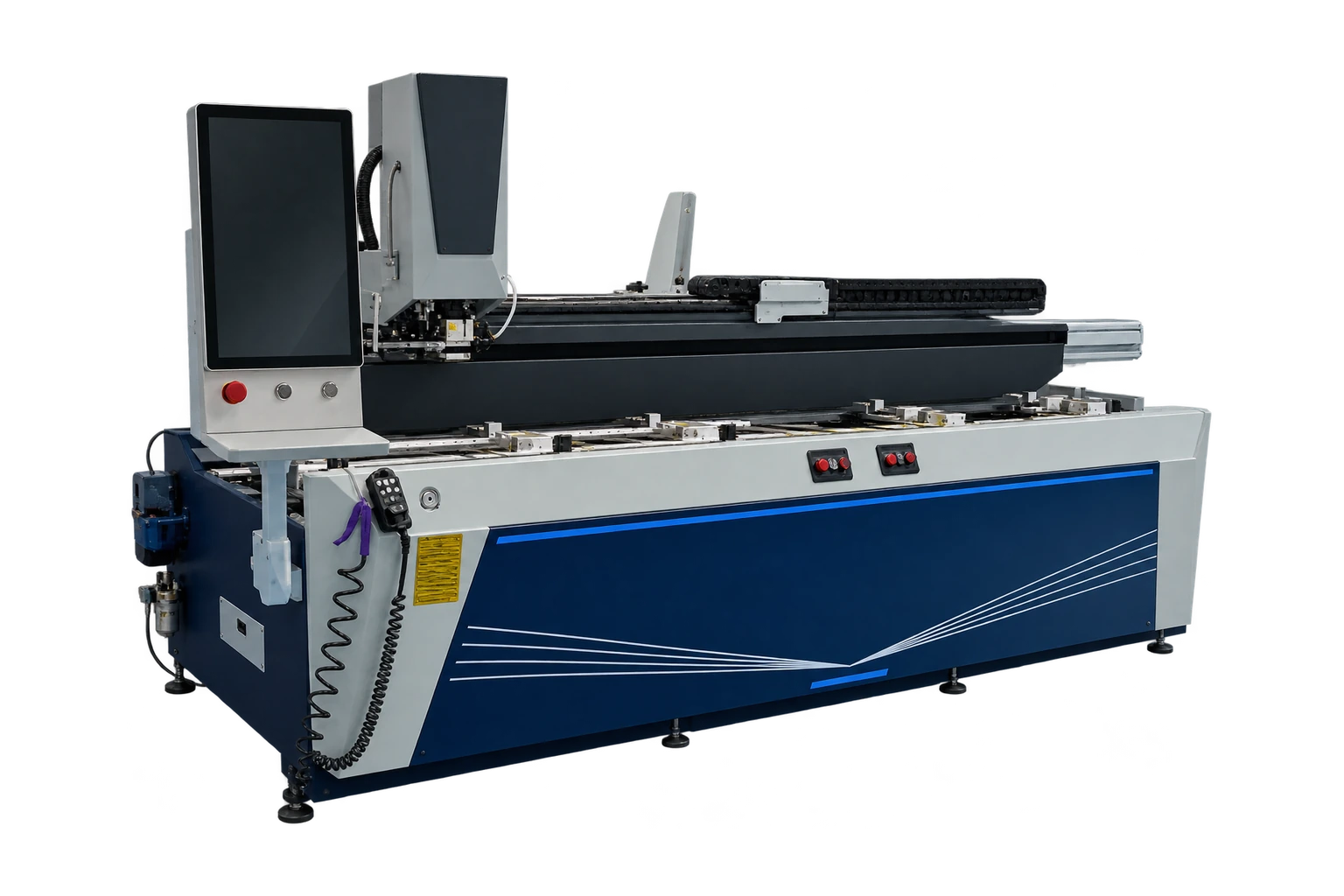
When qualifying aluminum curtain wall profile processing equipment for long parts, include far-end dimensions in the trial and record the temperature at measurement.