
Double Head Saw Cut Plan: Pairing 1,420 mm and 1,530 mm Members
Four members fit one 6,000 mm bar on paper with 54 mm left. The deciding constraint is the saw’s minimum safe tail grip.
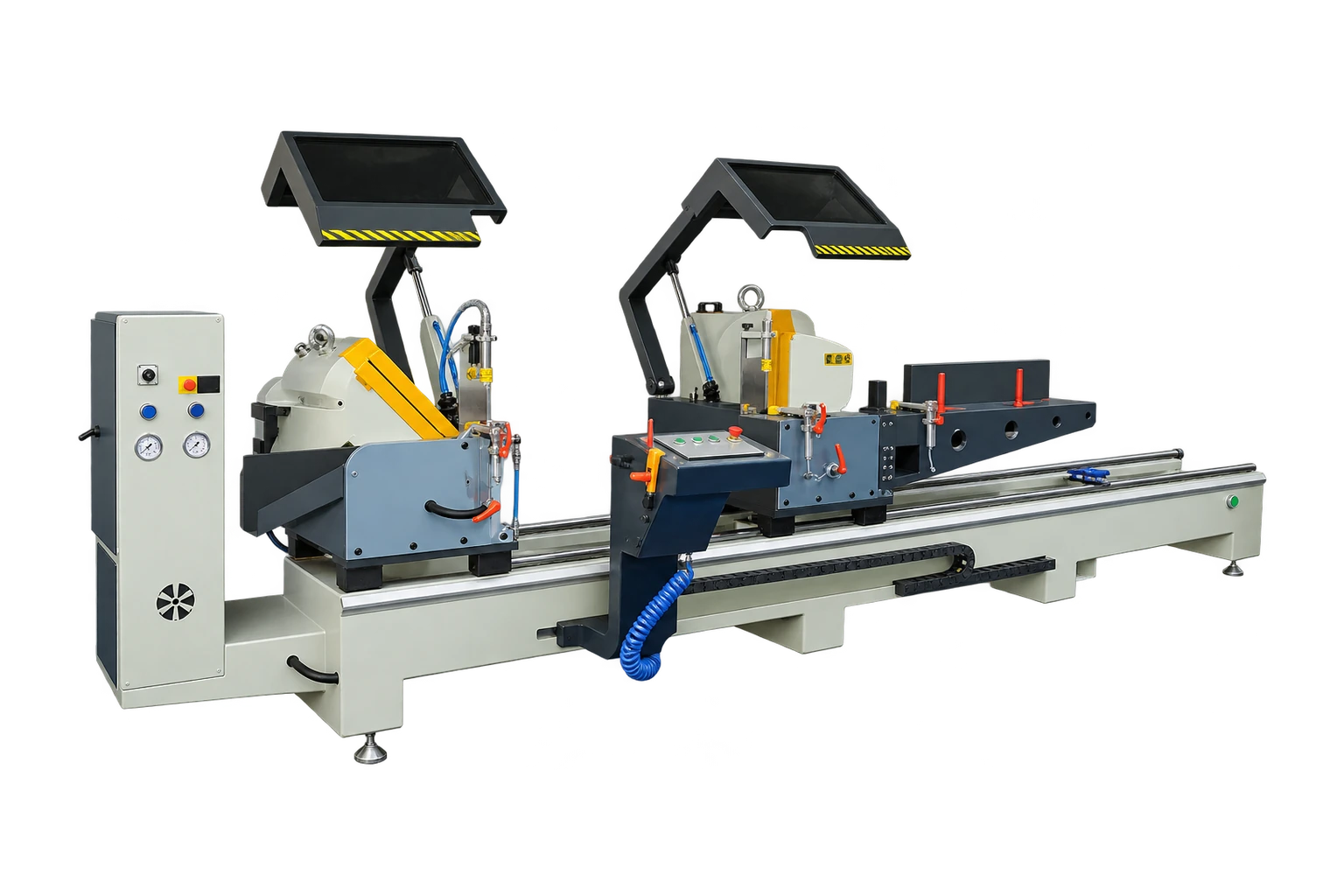
This application example uses public references and explicitly stated planning inputs. Figures derived from assumptions are estimates for evaluation, not measured customer results.
Production question
Can a saw program use one 6,000 mm bar for two short and two long members?
Worked calculation
The parts use 5,900 mm. Assume four chargeable kerfs of 4 mm and 30 mm combined trim allowance. The model consumes 5,946 mm and leaves 54 mm. Net length yield is 5,900 ÷ 6,000 = 98.3%. For a constant cross-section, this is also the net mass fraction before machining.
How to validate it on the shop floor
Measure the effective axial kerf at the programmed angle and confirm cut-length convention, minimum tail grip and actual trim cuts. If the saw needs 70 mm of secure tail, the proposed 54 mm remainder fails.
What to do with the result
Treat the 54 mm remainder as the theoretical balance after the assumed losses. For a 70 mm tail-grip requirement, the pattern needs another 16 mm of usable stock or a different nesting pattern. Ask whether trim already includes its own kerf and whether the grip is measured from the final blade line or from the clamp face. Enter those definitions in the cut plan before comparing patterns.
Practical follow-up
Does 98.3% translate directly into purchasable yield? Only for this repeat mix and bar length. Add stock variation, damage, remnants and the machine’s clamp rules to the real cut plan.