
Three-Head Aluminum Cutting Saw: When Unloading Limits Output
In the pipelined example, a faster saw lifts expected good output from about 143 to 171 pieces per hour, then unloading sets the limit.
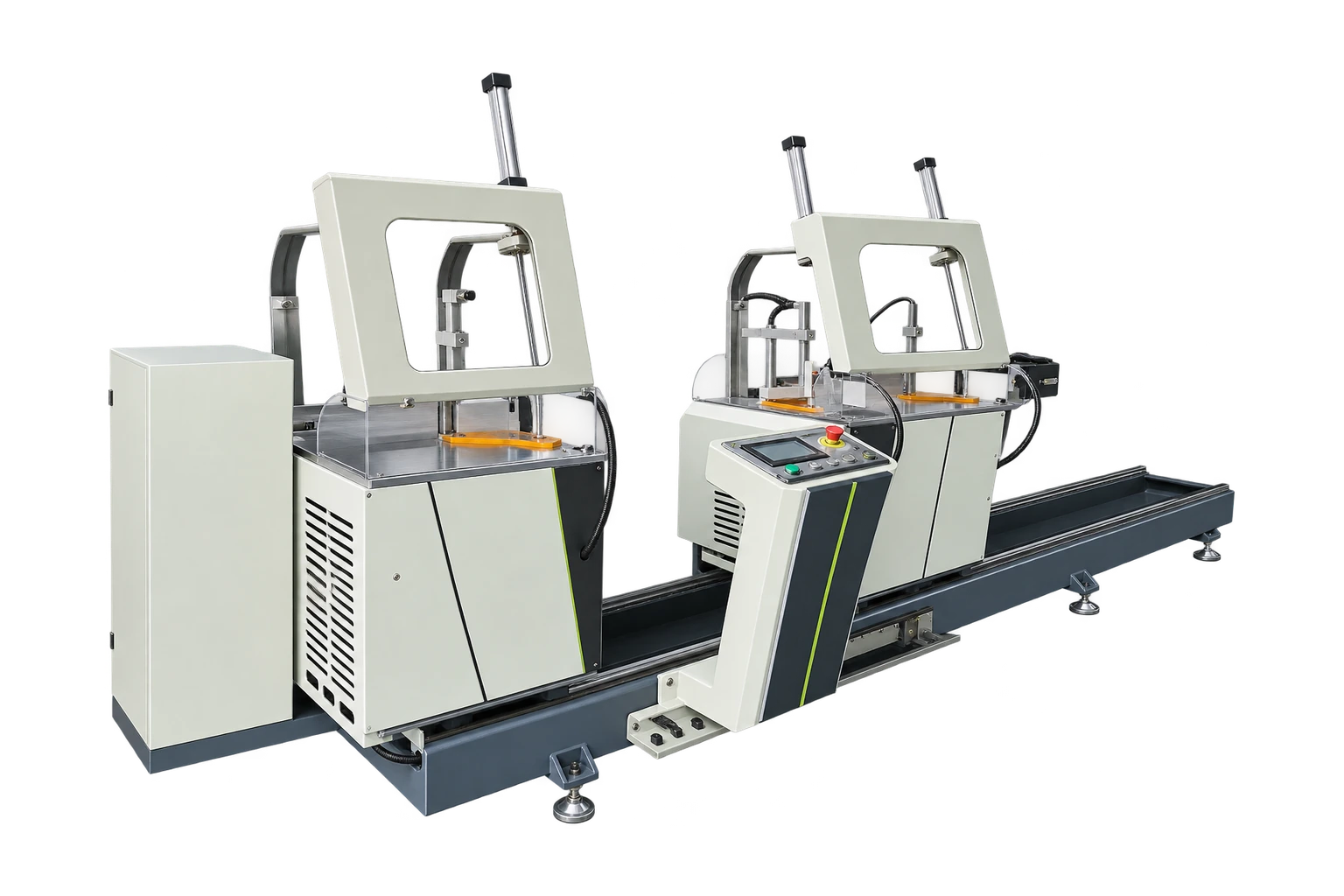
This application example uses public references and explicitly stated planning inputs. Figures derived from assumptions are estimates for evaluation, not measured customer results.
Production question
If cutting time drops, how many good parts can a cell produce when unloading is unchanged?
Worked calculation
In a pipelined model, use 24 seconds for the existing saw stage, 16 seconds for the proposed stage, and 20 seconds for unloading and sorting. At steady state the bottleneck changes from 24 to 20 seconds: 150 to 180 pieces/hour before losses. At an assumed 95% first-pass yield, expected good output is about 143 to 171 pieces/hour.
How to validate it on the shop floor
Measure the stages over a representative mixed batch and check whether the next part can truly be cut while the previous one is sorted. Include sorting rack changeovers and checks for mirrored ends.
What to do with the result
Track when the saw waits for the output rack and when the sorter waits for parts. A buffer may absorb a brief mismatch but cannot sustain a stage that consistently takes 20 seconds per piece while upstream releases one every 16 seconds. Evaluate the extra head using actual cut families and reject reasons, especially when the third operation changes the part orientation or the number of pieces produced per cycle.
Practical follow-up
What if loading and unloading cannot overlap cutting? Add the times for the serial steps instead of using the maximum. The pipelined estimate then overstates output.