
Three-Sided Drilling and Milling for Aluminum Profiles
Compare flip fixtures, indexing and multi-axis heads for multi-side aluminum profile machining, with a sample-part acceptance checklist.
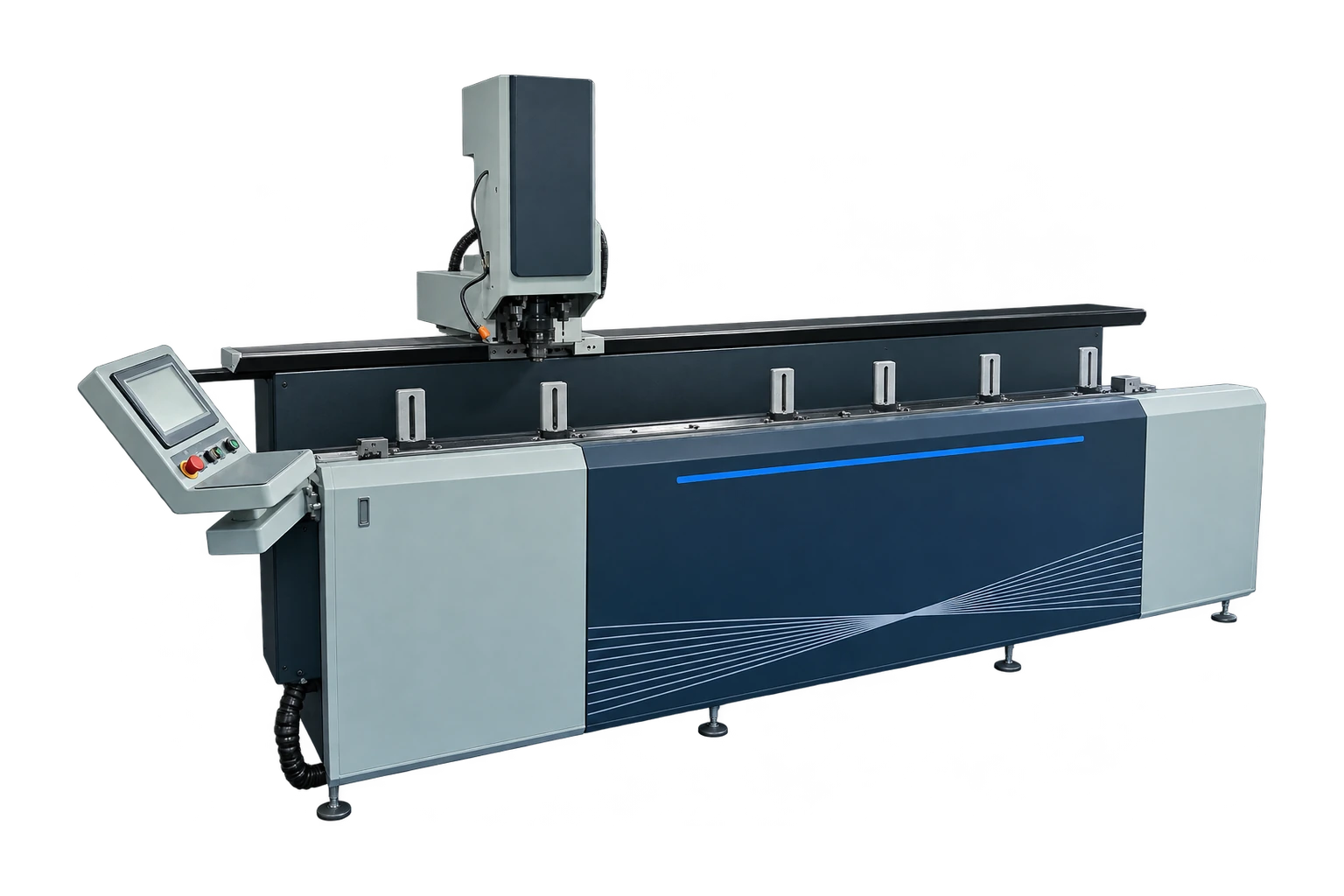
Three-sided drilling and milling means a machine or setup can reach features on three faces of a profile. A flip fixture, indexing arrangement or tilting head can provide that access. Ask how each face is reached, which moves the operator must perform and how the datum carries across faces.
What changes when holes and slots span several faces?
On an aluminum window frame, a slot on one face and a fixing hole on an adjacent face can each be within their own size tolerances while still being misaligned relative to each other. Put a shared datum on the drawing and inspect the relationship between the features. Include clearance around clamps and tool holders in the review.
| Approach | Question for the supplier | Sample check |
|---|---|---|
| Flip fixture | How is the part relocated and referenced after the flip? | Inspect cross-face feature position after multiple reloads. |
| Indexed table or head | Which faces and angles can be reached with this section? | Run the widest section and check for clamp interference. |
| Multi-axis head | Which moves are indexed and which can run simultaneously? | Run the feature that requires the most complex approach angle. |
Is three-sided machining the same as three-axis CNC?
Three-sided describes which faces a process can reach. Three-axis describes machine motion. A fixture can present several faces to a three-axis machine, while an angled or rotary head can change tool approach. Compare the actual setup sequence instead of relying on the axis count to infer face access.
Accept the process on a representative batch
Ask for a sample run using your finish, profile section and hardware. Check burrs, visible clamp marks and feature positions across faces. Record the number of setups and the elapsed time from loading to accepted part. If your work also includes end notching or transom end milling, list the end operations separately and confirm access from both ends.
Where the Jinren three-sided machine fits
The Jinren three-sided drilling and milling machine for aluminum profiles uses a flip fixture to reach different faces. For long extrusions with widely spaced features, also compare the heavy-duty drilling and milling machine. Send a marked-up profile drawing for a setup review.
References: elumatec SBZ 122/71 for an indexed angle head example and Fom Industrie FMC Serie 1 for a rotary table example.
What to prepare
Number each machined face on the profile drawing and mark one reference end. Translate that numbering into the setup sheet so the operator can distinguish a rotated part from a mirrored program.
What to check during the trial
Separate fixture repeatability from spindle accuracy. Inspect a feature on the first face, index the part, and measure the corresponding features against the common datum.
How to record the decision
Trial the widest and least rigid cross-sections. Clamp interference or stock movement can change the viable process even when a nominally smaller part runs successfully.
When comparing a CNC drilling machine for aluminum profiles with a multi-face setup, ask the supplier to show which holes share a datum after the part is indexed. Measure that relationship on two consecutive parts.